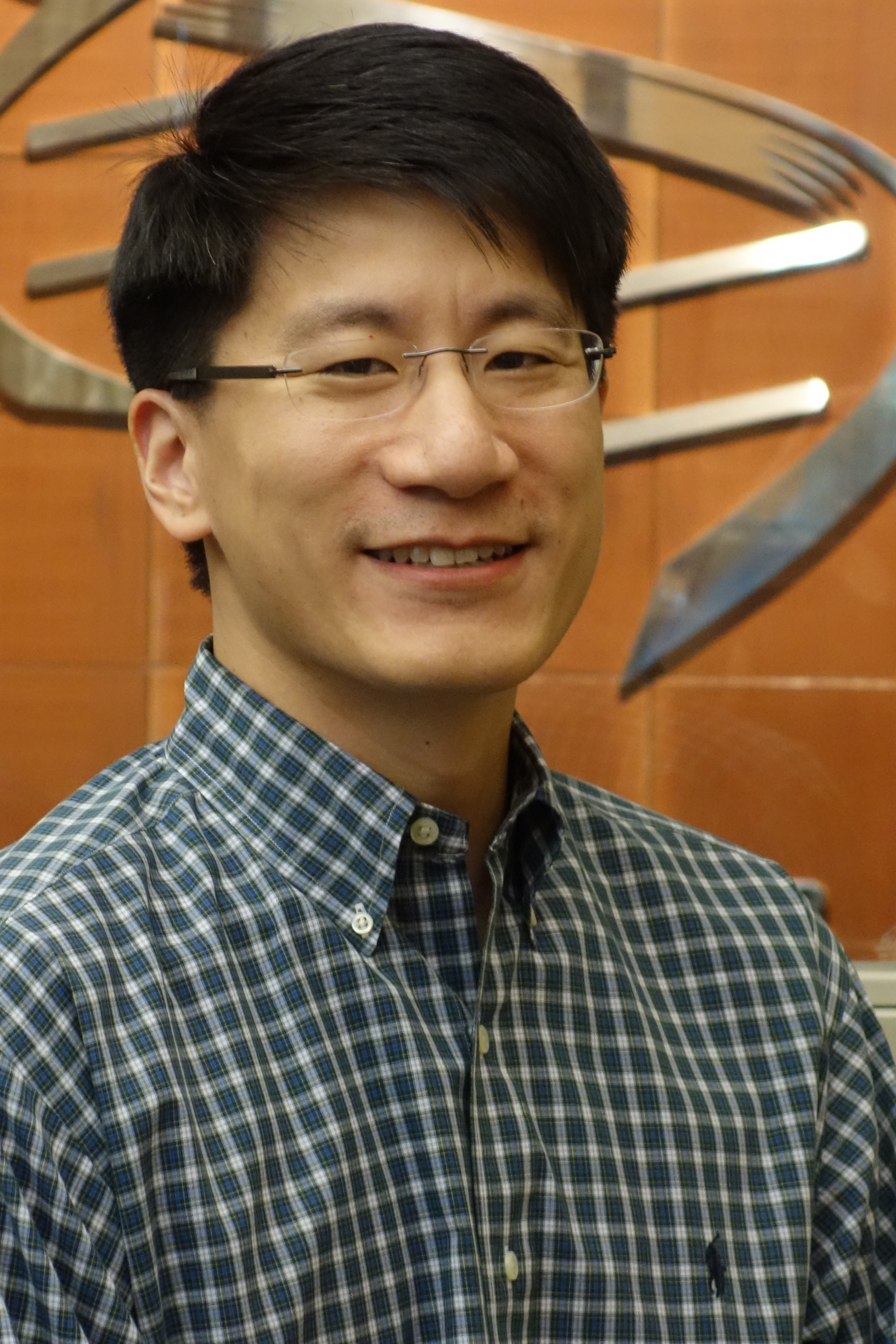
Faculty Profile
Kelvin H. Lee
Gore Professor of Chemical & Biomolecular Engineering
Institute Director, National Institute for Innovation in Manufacturing Biopharmaceuticals (NIIMBL)
Education
- Doctorate – 1995 California Institute of Technology
- Masters – 1993 California Institute of Technology
- Bachelors – 1991 Princeton University
About Kelvin H. Lee
Kelvin H. Lee is Director of the Manufacturing USA National Institute for Innovation in Manufacturing Biopharmaceuticals (NIIMBL) and he is the Gore Professor of Chemical and Biomolecular Engineering at the University of Delaware. He previously served as Director of the Delaware Biotechnology Institute. He received a BSE in Chemical Engineering from Princeton and PhD in Chemical Engineering from Caltech. He spent several years in the Biotechnology Institute at the ETH in Zurich, Switzerland and also completed a postdoc in Caltech’s Biology Division. Prior to his current appointment, he was on the faculty at Cornell University where he held the titles of: Samuel C. and Nancy M. Fleming Chair Professor, Professor in the School of Chemical and Biomolecular Engineering, Director of the Cornell Institute for Biotechnology, and Director of the New York State Center for Life Science Enterprise.
Select Publications
For a complete listing of publications, please view the Full CV.
- P Gupta, KH Lee, “Silent Mutations Result in HlyA Hypersecretion by Reducing Intracellular HlyA Protein Aggregates.”, Biotechnology and Bioengineering (2008)
- L Griffiths, LH Choe, KH Lee, KF Reardon, E Orton, “Protein Extraction and Two-Dimensional Gel Electrophoresis of Water-and Lipid-Soluble Proteins From Bovine Pericardium, a Low-Cellularity Tissue.”, (2008)
- Lee D.H., Kim S.G., Park Y.C., Nam S.W., Lee K.H., Seo J.H., “Proteme analysis of recombinant Escherichia coli producing human glucagon-like peptides.”, Journal of Chromatography 849, 323, (2007)
- Kuczenski R., Hong K., Garcia-Ojalvo J., Lee K.H., “Phosphorylated CLK can explain the delay in Drosophila circadian periodicity.”, PLoS Computational Biology 3, e154, (2007)
- Lee K.H., Relkin N.R., “Reply: Cerebrospinal fluid biomarkers for Alzheimer’s Disease.”, Annals of Neurology 61, 497, (2007)
- DH Lee, SG Kim, YC Park, SW Nam, KH Lee and JH Seo, “Proteome analysis of recombinant Escherichia coli producing human glucagon-like peptide-1”, Journal of Chromatography 849, 323, (2007)
- Finehout E.J., Franck Z., Choe L.H., Relkin N.R., Lee K.H., “Cerebrospinal Fluid Proteomic Biomarkers for Alzheimer’s Disease.”, Annals of Neurology 61, 120, (2007)
- Gupta P., Lee K.H., “Genomics and Proteomics in Process Development: Opportunities and Challenges.”, Trends in Biotechnology 25, 324, (2007)
- Choe L.H., D’Ascenzo M., Relkin N.R., Pappin D., Ross P., Williamson B., Guertin S., Pribil P., Lee K.H., “8-Plex Quantification of changes in cerebrospinal fluid protein expression in subjects undergoing intravenous iimmunoglobulin treatment for Alzheimer’s disease.”, Proteomics 7, 3651, (2007)
- Aggarwal K., Choe L.H., Lee K.H., “Shotgun proteomics using the iTRAQ isobaric tags.”, Briefings in Functional Genomics and Proteomics 5, 112, (2006)
Patents
- Porous Electrophoresis Sponges (5,637,202): California Institute of Technology, 1997
- Proteome Markers for Diagnosis of Alzheimer’s Disease. (provisional patent application filed) ():
Awards
For a complete listing of awards, please view the Full CV.
- Gore Professor of Chemical Engineering (University of Delaware: 2007)
- Invited Participant in NSF New Century Scholars workshop, Stanford, California: 2006 – 2006
- Samuel C. and Nancy M. Fleming Professor of Molecular and Cell Biology (Cornell University: 2005 – 2005)
- Distinguished Professor, NYS Office of Science, Technology and Academic Research: 2004 – 2004
- Cornell Provost’s Ronay and Richard Menschel Award for Distinguished Scholarship: 2004 – 2004
- Invited Participant in the National Academy of Engineering Frontiers of Engineering Symposium, Irvine, California: 2003 – 2003
- Camille Dreyfus Teacher-Scholar Award: 2003 – 2003
- Jay Bailey Young Investigator Best Paper Award in Metabolic Engineering: 2002 – 2002
- MIT Technology Review Top 100 Innovators in the World in Business & Technology: 2002 – 2002
- Invited Participant in the National Academy of Engineering Third German-American Frontiers of Engineering Symposium, Bremen, Germany.: 2000 – 2000
Research Areas
Biomolecular, biomedical, and metabolic engineering; proteomics and systems biology; biological mass spectrometry; protein secretion and synthesis; diagnosis and treatment of neurodegenerative diseases.